How to choose appropriate clothing for safe work at construction sites in Japan
I wrote the article!

Japan Association for Construction Human Resources
Safety and health lecturer
Kamoshita Sadaharu
(Kamoshita Sadaharu)
Hello, this is Kano from JAC (Japan Association for Construction Human Resources).
This time, we asked Mr. Kamoshita, a safety and health lecturer, to explain what to wear when working at a construction site in Japan.
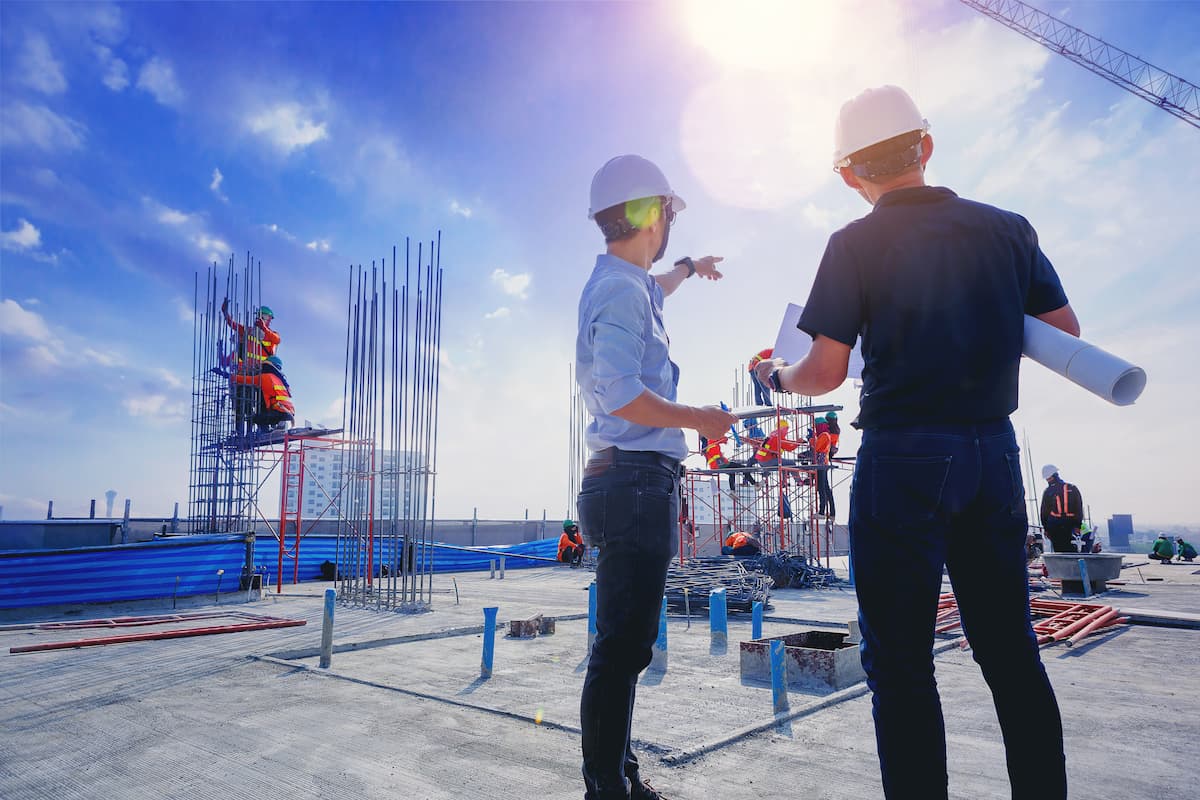
When working on a construction site in Japan, it is important to wear clothes that are appropriate for the construction site.
Wearing appropriate clothing for the construction site can help prevent injuries while working and ensure safe work.
In this article, we will introduce the rules for working safely in Japan and how to choose them in an easy-to-understand manner.
Reasons why you should pay attention to your attire at construction sites
The clothing worn when working on a construction site plays an important role in protecting the body.
Here are three reasons why clothing is important.
Reason ① To prevent injuries
Construction sites are full of dangers, including heavy machinery, sharp metal plates, and working at high altitudes.
Wearing the wrong clothes can lead to serious accidents due to even slight carelessness.
For example, the following types of injuries occur at construction sites:
- He wasn't wearing safety shoes and dropped the steel plate he was carrying on his foot, fracturing his toe.
- He was not wearing protective gloves and cut his fingers on a metal shard, causing severe bleeding.
- For example, the person was not wearing their helmet correctly and was struck on the head by something that fell from above.
These injuries could have potentially been prevented if the workers had been wearing the correct clothing.
Also, wrapping a towel around your neck or wearing clothes that don't fit properly can be dangerous.
Towels or clothing could get caught in the machine and cause injury.
Reason ② To cope with Japan's severe heat
In Japan, summer temperatures can sometimes exceed 35 degrees Celsius.
Another characteristic is that it is hot and humid.
As a result, many people suffer from heatstroke every year.
Construction work, in particular, involves a lot of outdoor work and physical activity, which can easily raise body temperature.
Wearing inappropriate clothing increases the risk of heatstroke.
Between 2020 and 2024, 4,710 people were diagnosed with heatstroke while at work, and 961 of them were involved in the construction industry.
This accounts for 20% of the total.
*Ministry of Health, Labour and Welfare "2024 (2024) Occurrence of Fatal and Injury Accidents Due to Heat Stroke in the Workplace (Confirmed Value)"
Reason ③ To demonstrate that the construction is safe.
Wearing the correct attire at a construction site serves to demonstrate that the work is safe.
If someone is working in dangerous clothing, the client who commissioned the construction or people passing by the site will become worried, wondering, "Is this really a safe construction project?" or "Could an accident happen?"
By dressing appropriately for a construction site, you can give people the confidence that "this construction site is safe" and allow them to entrust you with the work.
Basic rules for clothing and work clothes at construction sites
Here's a guide to basic attire for working on a construction site.
We will also explain some essential items needed to protect your body.
Basic clothing and items for construction sites
The following seven items of clothing are commonly worn at construction sites:
- Long-sleeved shirt and long pants work clothes
- helmet
- safety shoes
- Fall arrest equipment
- gloves
- High-visibility vest
- Dust mask
We will introduce each one in detail.
Long-sleeved shirt and long pants work clothes
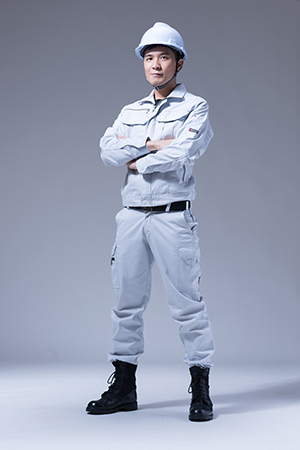
Work clothes generally consist of long-sleeved shirts and long pants.
Covering your skin protects you from burns, cuts, and other injuries.
It also serves to protect you from direct sunlight.
When wearing work clothes, make sure to fasten the buttons on the cuffs of the work clothes properly.
Also, be sure to check that your work clothes are not torn before entering the construction site.
helmet
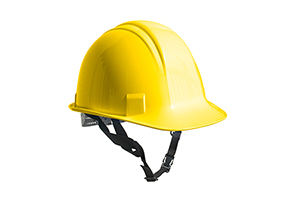
Helmets are necessary to protect your head in the following situations:
- When something falls from above
- When I fell
- When you fall from a high place, etc.
When wearing a helmet, make sure to fasten the chin strap securely.
If you don't fasten the chin strap properly, it will come undone when you move or when there is an impact.
Please also check if the helmet's chin strap is deteriorated.
Also, there are various types of helmets.
When using them on a construction site, choose ones that protect against falling objects, protect against falls, and, if necessary, also protect against electrical issues.
Basically, the company will provide you with a helmet suitable for the construction site.
Let's take good care of it.
safety shoes
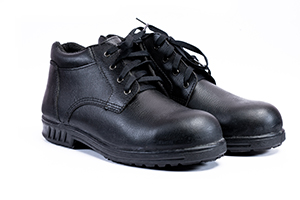
These are special shoes with a hard plate made of iron or resin inside the toe area.
These protect your feet from injury if heavy materials fall on them or if you step on a nail.
To ensure safe use, please check that it is not torn.
Fall arrest equipment
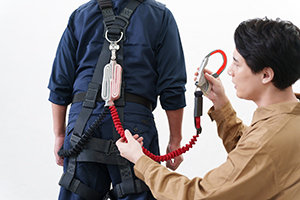
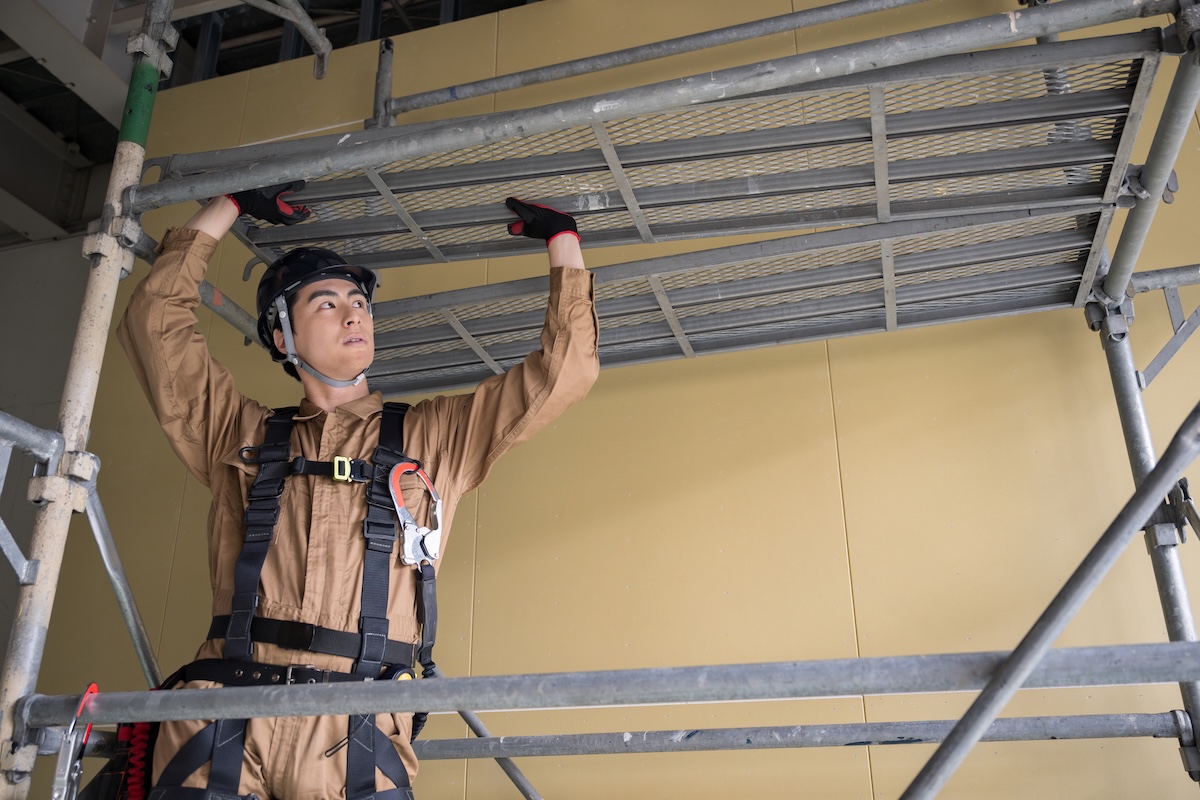
Fall protection equipment is a safety harness that connects your body to scaffolding when working at high places.
Even if you are about to fall from the scaffolding, wearing fall protection equipment will prevent you from falling all the way to the ground.
There are several types of fall protection equipment.
In Japan today, the basic rule is to use a full-body harness that supports from the shoulders to the groin.
If the belt of a fall protection device is loose, it is dangerous because your body will be tightly constricted in the event of a fall.
Always adjust the belt to fit snugly to your body, and check each time to make sure the belt isn't twisted and that the hooks are securely fastened.
gloves
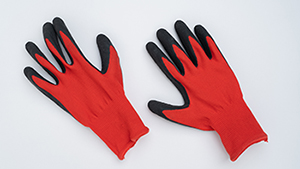
Construction sites contain many materials, such as rebar and glass, that can cause deep cuts if touched with bare hands.
Wear gloves to prevent injury from such materials.
When carrying heavy objects, use a non-slip grip; when using a cutter, use a material that prevents the blade from penetrating. Choose the appropriate grip depending on the task.
It can also protect your hands from heat and contact with chemicals.
High-visibility vest
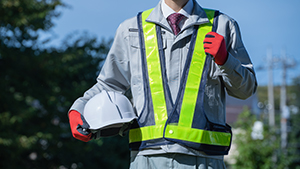
High-visibility vests make it easier to locate workers and help prevent accidents with vehicles and heavy machinery.
The bright colors and reflective tape make it easy to spot workers from a distance.
Accidents involving vehicles, heavy machinery, and workers coming into contact with each other are also common at construction sites.
Collisions are more likely to occur during nighttime construction, road construction, or construction work in bad weather.
Wearing a high-visibility vest reduces the risk of accidents in such situations.
Dust mask
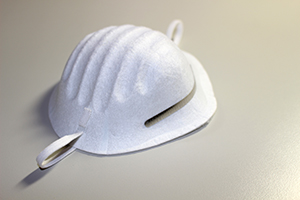
It's used when cutting concrete or on construction sites where fine dust is flying around.
Wearing a dust mask can prevent you from inhaling tiny, invisible dust particles and becoming ill.
Make sure to press it firmly against your face so that there are no gaps.
Clothing and items needed depending on the season
Many regions in Japan experience significant temperature fluctuations depending on the season.
Therefore, depending on the season, you will need clothing to protect you from the heat or cold.
[Summer] Air-conditioned clothing
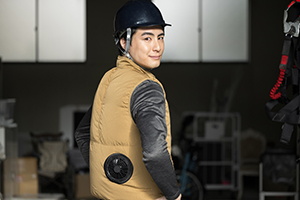
This is workwear with a small built-in fan.
It circulates air inside your clothes to dry sweat and cool your body.
It is effective in preventing heatstroke on hot days.
Air-conditioned clothing is used by charging the included battery.
Since it won't work if the power runs out, don't forget to charge it before using it.
[Winter] Heated Vest
This vest will keep you warm even on cold winter days thanks to its electric heating function.
The clothes have a built-in heater, so your body warms up quickly.
Because it's thinner and lighter than a typical thick jacket, it allows for easier movement.
However, just like with air-conditioned clothing, it requires a rechargeable battery to use.
To prevent the battery from running out, always charge the device before use.
How to choose clothing and work clothes for construction sites
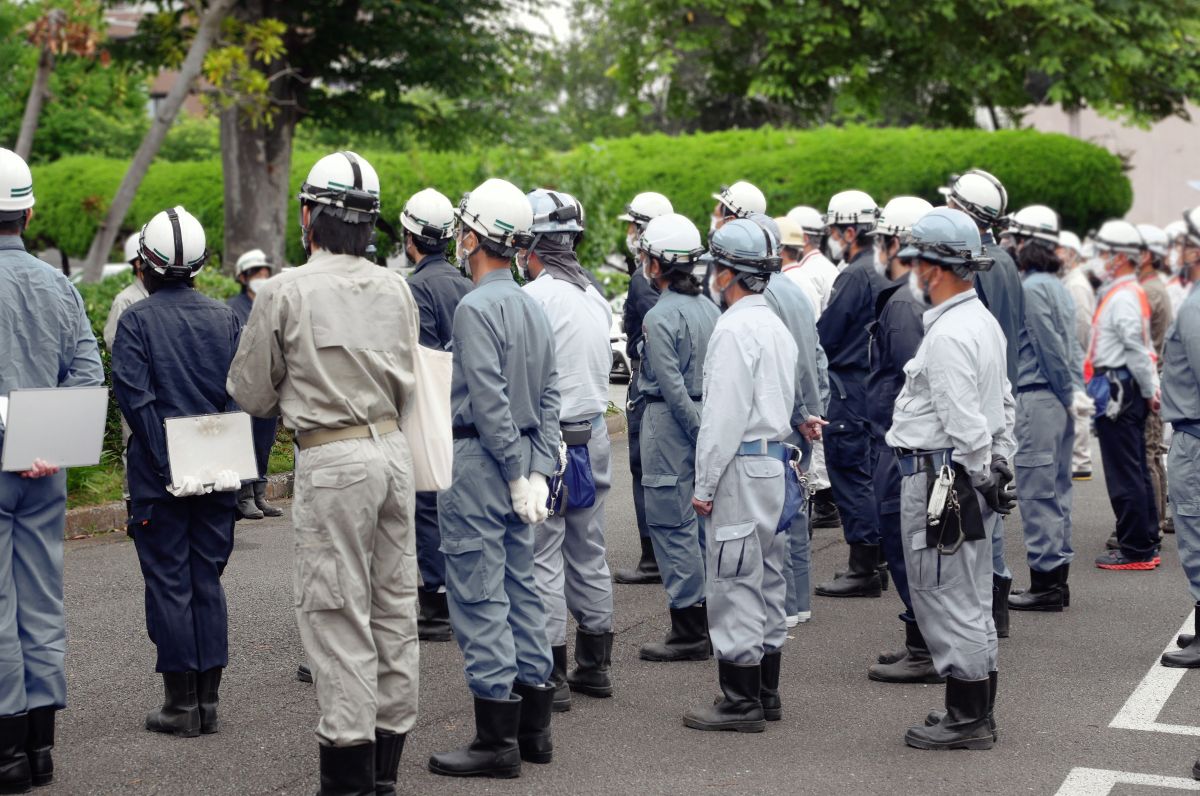
When choosing clothing for work at a construction site, check the following three points.
Point 1: Company rules and site designations
Some companies have restrictions on the colors and designs of clothing that can be worn.
Furthermore, the standards for work clothes may be strictly defined depending on the environment of the construction site.
For example, at a construction site at night, work clothes with reflective panels are necessary.
Work clothes may be purchased by the employee or provided by the company.
If you're buying it yourself, be sure to confirm with someone at your company beforehand, "Is this okay?"
If provided by the company, work clothes are often provided as a set of jacket and trousers.
Generally, it is paid twice a year, once from spring to summer and again from autumn to winter.
In addition, the following items are regularly provided or lent to you:
- safety shoes
- Helmets, etc.
Company-issued items may feature the company name or logo.
This is because people from various companies gather at construction sites, and it makes it easier to identify which company someone belongs to.
Point 2: Size and ease of movement
You might think that slightly larger clothes are more comfortable, but that's dangerous on a construction site.
If your clothes are too big, there's a risk of them getting caught on scaffolding and causing you to trip, or getting caught in rotating machinery.
Conversely, if the feet are too small, the body cannot move freely, and fatigue sets in easily.
Try it on and choose a size that allows you to move your arms and knees freely.
Point 3: Quality and safety
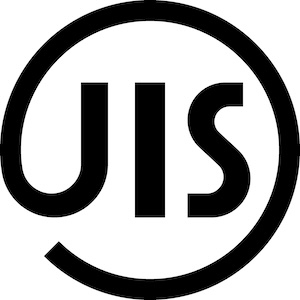
When choosing clothing to wear at a construction site, pay attention to the JIS mark.
https://www.jisc.go.jp/newjis/newjismknews.html
In Japan, strict regulations regarding quality and safety are in place.
Products that meet the strict requirements of the JIS standard are marked with the "JIS mark".
If there is a product with the JIS mark, it would be best to choose that one.
Summary: When choosing clothing for a construction site, prioritize safety.
To work safely on construction sites in Japan, it is important to wear appropriate clothing for the work environment.
The clothing you wear on a construction site is essential equipment to protect yourself from serious injuries and accidents.
Proper attire also plays a role in preventing heatstroke and demonstrating safety during construction work.
Long-sleeved shirts, long pants, helmets, and safety shoes are required at many construction sites.
Please be sure to wear it to ensure your safety while working.
When buying clothes or shoes, it's also important to follow the rules set by your company.
Please choose the correct size and wear it properly.
When choosing your own work clothes for a construction site, it's best to select items that meet Japan's safety standards, known as "JIS standards."
About us, JAC
JAC(Japan Association for Construction Human Resources)is an organization that supports all Specified Skilled Workers working in the Japan construction industry. We work with companies that accept Specified Skilled Workers to create a work environment that is easy for everyone to work in.
We're also taking the exams you need to become a Specified Skilled Workers!
And JAC has received many requests for job offers from companies that want Specified Skilled Workers to work for.
Specified Skilled Workers Wanted! Job Listings
For those of you who want to work in Japan using Specified Skills, we are introducing jobs that match your occupation and aspirations!
If you have any problems, please feel free to contact us!