How to Visit a Hospital in Japan? Common Phrases to Use at the Hospital!

I wrote the article!

Japan Association for Construction Human Resources
Chief of Research and Development Department / Administration Department / Public Relations Department
Motoko Kano
(Kano Motoko)
Hello, this is Kano from JAC (Japan Association for Construction Human Resources).
When you live in Japan, you may go to the hospital due to illness or injury.
In order not to panic in an emergency, check how to visit the hospital and what to bring.
In this article, we will introduce in detail how to visit a hospital in Japan and Japanese phrases commonly used in hospitals.
How to Visit a Hospital in Japan
We will introduce what you should bring when visiting a hospital in Japan and the process from reception to receiving your medication.
*About "hospitals" and "clinics"
In Japan, medical institutions are generally referred to as "hospitals" and "clinics."
- Hospital: A place to go if you have a serious illness, serious injury, or need surgery.
- Clinic: A place where you can go for minor illnesses or minor injuries
In Japan, the general procedure is to first visit a clinic and then be referred to a larger hospital if necessary.
In this article, the term "hospital" will include clinics.
What to bring to the hospital
We will introduce the things you must bring with you when going to the hospital and the things that are useful to have.
【Things to bring】
- My Number Card as your Health Insurance Certificate
- Residence card or passport
- cash
About My Number Card as your Health Insurance Certificate
You will need a My Number Card as your Health Insurance Certificate to visit the hospital.
My Number Card as your Health Insurance Certificate is a Individual Number Cards ("My Number Card") registered as a health insurance card.
By presenting the My Number Card as your Health Insurance Certificate to the hospital, the burden of medical expenses will be reduced by 30%.
*If you do not pay social insurance premiums, the burden of medical expenses may increase. Check with the company you work for.
The National Health Insurance Card will no longer be available after December 2, 2025.
Even if you have been visiting a hospital using your National Health Insurance Card, you should bring your My Number Card as your Health Insurance Certificate to see a doctor.
To use My Number Card as your Health Insurance Certificate, you must register to use Individual Number Cards ("My Number Card") as an insurance card in advance.
There are two ways to register:
- Register at a medical institution
- Register yourself using the smartphone app
Please check the following page for details.
Ministry of Health, Labour and Welfare "My Number Card as your Health Insurance Certificate (Foreign Language Brochures)"
If you don't have a Individual Number Cards ("My Number Card") yet, you need to make a Individual Number Cards ("My Number Card") first.
If it takes a long time to issue a Individual Number Cards ("My Number Card"), you can order a confirmation of eligibility and use it.
Please ask the company you work for if you can apply for a certificate of qualifications.
Residence card and passport
Your residence card and passport are required for identity verification.
Regarding cash
Some hospitals only accept cash as a form of payment.
So don't forget to bring cash with you.
[Things that are useful to have]
- mask
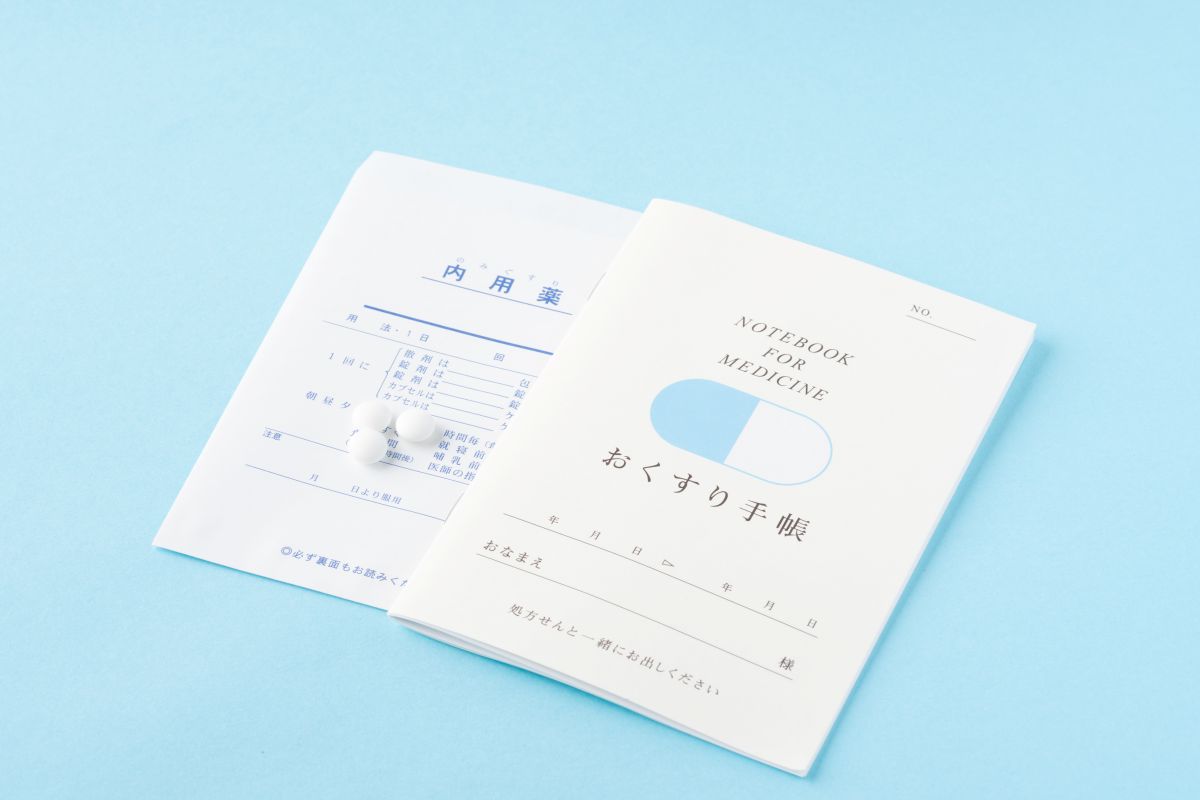
- Medicine notebook
- Medications and supplements you are taking
- A note of symptoms
About masks
Many hospitals in Japan ask patients to wear masks.
If you forget, you can buy one at the hospital.
About your medicine notebook
If you have visited a hospital in Japan and received medicine in the past, you probably have a "medicine notebook."
A medicine notebook keeps a record of the medicines you have been prescribed in the past.
Paper prescription books can be obtained free of charge from pharmacies and hospitals.
There is also a convenient smartphone app version of the medicine notebook.
If you forget your prescription book when getting your medicine at the pharmacy, the cost of your medicine may be a little higher.
The medicine record app is useful so you don't forget.
About medications and supplements you are taking
If you are taking medicines or supplements purchased from a drugstore or online, bring the medicines and their boxes with you to show your doctor or pharmacist.
A note of symptoms
It will be easier to communicate your symptoms if you bring a note with you writing them down.
Make a quick note of the following:
- Symptoms such as fever, cough, pain, and itching
- When symptoms began
- The part of the body where the symptoms occur
The process from reception to receiving your medicine
The general procedure when visiting a hospital in Japan is as follows:
- Check in
- Fill out the medical questionnaire
- Get a medical examination
- Make a payment
- Get your prescription and buy your medicine at the pharmacy
① Check in
When you arrive at the hospital, the first thing you do is check in.
There is a counter near the entrance, so please check in there.
At the reception, please submit the following documents:
- My Number Card as your Health Insurance Certificate
- Residence card or passport
② Fill out the medical questionnaire
Once you have checked in, you will be asked to fill out a medical questionnaire.
The medical questionnaire is a medical questionnaire.
Some of the most common questions asked on the questionnaire include:
- Personal information such as name, address, phone number, date of birth
- Height and weight
- Symptoms (e.g., fever, cough, abdominal pain)
- Duration of symptoms
- Are you eating and hydrating?
- Presence or absence of allergies
- Do you drink alcohol or smoke?
- Past medical and surgical history
- What medications are you currently taking?
- Possible pregnancy or breastfeeding status (women only)
The medical questionnaire is often written on paper, but questions may also be asked in Japanese.
If you are worried, it is helpful to make a note of your symptoms and any medications you are taking in advance, or to use a translation app.
When you fill out the medical questionnaire, you may be asked to take your temperature and blood pressure.
③Receive a medical examination
Consultations are generally on a first come, first served basis.
You will be called by name or the number given to you at the reception, so please wait in the waiting room.
During the consultation, the doctor will ask about your symptoms and examine you.
Depending on your symptoms, we may take blood tests and X-rays.
Your doctor will diagnose your condition and explain treatment options.
If your religion prevents you from taking certain medications or undergoing certain surgeries or blood transfusions, tell your doctor.
For example, Muslims should be careful about medicines that contain ingredients derived from pigs.
④ Make payment
Once the examination is over, you will wait to pay the bill.
You will be called at the reception and will make the payment.
More and more hospitals are now accepting credit card payments, but smaller hospitals often only accept cash payments.
⑤Receive your prescription and purchase your medicine
If the doctor prescribes the drug, a prescription will be issued.
A prescription is a piece of paper that describes the type and amount of medication needed for treatment or symptom relief.
In Japan, pharmacies are basically not located in hospitals.
Most of the time there is a pharmacy in the immediate vicinity of the hospital, so take your prescription to the pharmacy and pick up your medicine.
The cost of the medicine is paid at the pharmacy.
Pharmacies also submit My Number Card as your Health Insurance Certificate just like hospitals.
If you have a medication notebook, submit it as well.
About reservations
Many hospitals allow you to visit without making an appointment, but some hospitals require you to make an appointment.
Call or check the hospital's website.
Also, if you have any requests for religious reasons or other reasons, it is a good idea to check in advance whether they can accommodate your requests.
For example, if you are a Muslim woman, you should be specific about your request, such as "I would like to be assisted by female medical staff."
When you visit, it will be more reassuring if you let the doctor know that you would prefer to see a female doctor and have them confirm this.
Common Japanese Phrases Used in Hospitals
Here are some Japanese phrases that are often used in hospitals.
Japanese words often used at the reception
The following Japanese phrases are often used at hospital reception desks:
| Japanese words frequently used by patients | ||
|---|---|---|
| phrase | Japanese (Hiragana) | How to read |
| This is my first visit. | はじめて じゅしんします。 | Hajimete jushin shimasu. |
| I have a reservation. | よやく しています。 | Yoyaku shite imasu. |
| how long do you wait? | どのくらい まちますか? | Dono kurai machimasu ka? |
| How much is the bill? | かいけいは いくらですか? | Kaikei wa ikura desu ka? |
| Can you tell me where the nearest pharmacy is? | ちかくの やっきょくを おしえてください。 | Chikaku no yakkyoku o oshiete kudasai. |
| Can I make a reservation for the next one? | じかいの よやくは とれますか? | Jikai no yoyaku wa toremasu ka? |
| Japanese words often used by reception staff | ||
|---|---|---|
| phrase | Japanese (Hiragana) | How to read |
| Have you made a reservation? | ごよやくは されていますか? | Goyoyaku wa sarete imasu ka? |
| Please provide your insurance card. | ほけんしょうを おねがいします。 | Hokensho o onegai shimasu. |
| Please fill out the medical questionnaire. | もんしんひょうを かいてください。 | Monshinhyo o kaite kudasai. |
| Please take your temperature. | たいおんを はかってください。 | Taion o hakatte kudasai. |
| Please wait in your seat. | おせきで おまちください。 | Oseki de omachi kudasai. |
Japanese words often used during medical examinations
The following Japanese phrases are commonly used during doctor's consultations:
| Japanese words frequently used by patients | ||
|---|---|---|
| phrase | Japanese (Hiragana) | How to read |
| I have a cough. | せきが でます。 | Seki ga demasu. |
| I feel nauseous. | はきけが します。 | Hakike ga shimasu. |
| I have a fever. | ねつが あります。 | Netsu ga arimasu. |
| I have diarrhea. | げりを しています。 | Geri o shite imasu. |
| I feel tired. | からだが だるいです。 | Karada ga darui desu. |
| I have had a fever for ◯ days. | ◯にちまえから ねつが あります。 | ◯nichi mae kara netsu ga arimasu. |
| My fever is ◯ degrees. | ねつが ◯ど あります。 | Netsu ga ◯do arimasu. |
| I have a chronic illness called XXX. | じびょうに ◯◯びょうが あります。 | Jibyo ni ◯◯byo ga arimasu. |
| I have a medication allergy. | くすりの あれるぎーが あります | Kusuri no arerugi ga arimasu. |
| I am pregnant. I might be pregnant. | にんしん しています。にんしん している かのうせいが あります。 | Ninshin shite imasu. Ninshin shite iru kanosei ga arimasu. |
| I am not taking any medication. | のんでいる くすりは ありません。 | Nonde iru kusuri wa arimasen. |
A chronic illness is one that has been diagnosed and is currently being treated.
For example, asthma, diabetes, and high blood pressure.
| Japanese words commonly used by doctors and nurses | ||
|---|---|---|
| phrase | Japanese (Hiragana) | How to read |
| How long have you had symptoms? | いつから しょうじょうが ありますか。 | Itsu kara shojo ga arimasu ka? |
| What kind of pain are you experiencing? | どんな いたみが ありますか? | Donna itami ga arimasu ka? |
| Please open your mouth. | くちを あけてください。 | Kuchi o akete kudasai. |
| Listen to your chest. | むねの おとを ききます。 | Mune no oto o kikimasu. |
| Take a breath. | いきを すってください。 | Iki o sutte kudasai. |
| Please exhale. | いきを はいてください。 | Iki o haite kudasai. |
| Please lie on your back. | あおむけになって ねてください。 | Aomuke ni natte nete kudasai. |
| Touch ◯◯ (body part). | ◯◯を さわります。 | ◯◯ o sawarimasu. |
There are some expressions unique to Japanese when it comes to expressing pain.
Please read the detailed introduction here.
Learn how to express pain in Japanese! Learn how to express pain effectively
Things to know when visiting a hospital in Japan
To ensure a smooth experience at a Japanese hospital, it's a good idea to know the basic opening hours, closing days, medical specialties, and other information.
Business hours and closed days
Hospitals in Japan often have the following opening hours and closing days.
[For small hospitals in residential areas, etc.]
- Morning: 8:30 to around 12:00
- Afternoon: Around 14:00 to 18:00
- Saturday: 8:30-12:00
- Closed: Saturday afternoons, Sundays, and public holidays
- Lunch break: Usually 12:00-14:00
[In the case of large hospitals such as general hospitals]
- Reception: 8:30-11:30
*In the afternoon, appointments and specialist outpatient appointments are the main focus. - Closed: Saturday afternoons, Sundays, and public holidays
However, opening hours and closing days vary depending on the hospital.
Please check the hospital's website before going.
Hospital medical departments
In Japanese hospitals, medical departments are divided into specific areas according to body parts and specialties.
Please visit the appropriate department depending on your symptoms.
| Medical subject | Examples of symptoms |
|---|---|
| Internal Medicine | If you have symptoms such as a cold, fever, stomach pain, or diarrhea |
| Pediatrics | When children up to about 15 years old are unwell |
| dermatology | When you have skin symptoms such as eczema, acne, or itchiness |
| orthopedic surgery | When you have a fracture, sprain, or joint pain |
| ophthalmology | If you have eye symptoms such as itchy eyes or decreased vision |
| Otolaryngology | If you have ear pain, runny nose, or sore throat |
| Urology | If you have symptoms such as frequent urination, painful urination, or blood in the urine |
| Obstetrics and Gynecology (Gynaecology) | When you have symptoms specific to women, such as pregnancy, childbirth, or irregular menstruation |
| Psychiatry and Psychosomatic Medicine | When you have mental symptoms such as insomnia or depression |
| dentistry | When you have cavities or a chipped tooth |
When to call an ambulance
If immediate medical treatment is needed, call an ambulance.
The telephone number for an ambulance is 119.
The following are cases in which you should call an ambulance:
- Unconscious or unresponsive
- I can't breathe, I have severe difficulty breathing
- I have severe chest pain
- Heavy bleeding or serious injuries
- Sudden severe headache
Ambulance service is generally free of charge.
However, ambulances are for people who need immediate medical attention.
If your symptoms are mild and treatment is deemed unnecessary, you may be charged.
If your symptoms are mild, go to the hospital yourself or take a taxi.
If you are unsure whether to call an ambulance, please call #7119 for advice.
If you have difficulty using "#7119," please refer to the support site for foreigners, "Tokyo EMS Guide."
Tokyo EMS Guide
Information on how to call an ambulance can be found in this article.
How do you call an ambulance in Japan? Learn the correct way to use one
How to find a hospital
If you are unsure about your Japanese, try looking for a medical institution that can provide services in foreign languages.
The website provided by the Japan National Tourism Organization is very useful.
On the Japan National Tourism Organization website, you can easily find the following information:
- Hospitals that offer services in foreign languages (English, Chinese, Korean, etc.)
- Location (by prefecture)
- Medical subject
- How to receive treatment (whether or not you make an appointment, etc.)
*Reference: Japan National Tourism Organization's "Helpful Guide for When You're Sick"
【 For Specified Skilled Worker (i)】Multilingual Support Desk for Hospital Visits
Specified Skilled Worker (i) working in the construction sector can use JAC's "Multilingual Support Desk for Hospital Visits".
The multilingual support desk for hospital visits is available 24 hours a day and can be used in more than 30 languages.
With this service, you will receive the following support:
- Support for finding a nearby hospital
- Support for hospital appointments, changes, and cancellations
- Medical interpretation over the phone
- Payment of compensation for hospitalization and surgery due to injury
When you are unwell or injured, the first thing that bothers you is not knowing which hospital to go to.
JAC's multilingual hospital support desk will help you find a hospital where you can be seen by telling them your current location and symptoms.
If you are worried about communicating at a hospital or pharmacy, you can call an interpreter and have them translate over the phone.
There are no call or interpretation fees when using the service.
For details about the service and how to use it, please click here.
"Medical interpretation support" to ease foreigners' anxieties through multilingual support
Multilingual medical support desks are available via the following links:
Use the "Multilingual Hospital Support Desk"
Summary: When going to the hospital, be sure to check the consultation procedure and common phrases to use.
When visiting a Japanese hospital, you must first show your My Number Card as your Health Insurance Certificate and passport or residence card at the reception.
After that, you will fill out a questionnaire and wait for your turn to be examined.
Some hospitals require reservations, so it is safe to check the website in advance.
If you need consideration depending on your religion, check if they can accommodate you.
It is also useful to remember Japanese phrases that are often used in hospitals.
If you can afford it, it is safe to prepare before your visit.
If you are unsure about receiving a medical examination in Japanese, it is safe to use the Japan National Tourism Organization's guide to find a medical institution that can speak foreign languages in advance.
If you are a Specified Skilled Workers working in the construction field, please also take advantage of JAC's "Multilingual Support Desk for Hospital Visits".
About us, JAC
JAC(Japan Association for Construction Human Resources)is an organization that supports all Specified Skilled Workers working in the Japan construction industry. We work with companies that accept Specified Skilled Workers to create a work environment that is easy for everyone to work in.
We're also taking the exams you need to become a Specified Skilled Workers!
And JAC has received many requests for job offers from companies that want Specified Skilled Workers to work for.
Specified Skilled Workers Wanted! Job Listings
For those of you who want to work in Japan using Specified Skills, we are introducing jobs that match your occupation and aspirations!
If you have any problems, please feel free to contact us!