When working outdoors, heat countermeasures are essential! Construction workers should be careful about heatstroke.

I wrote the article!

Japan Association for Construction Human Resources
Public Relations Department/Administration Department
Tsubasa Yoshioka
(Yoshioka Tsubasa)
Hello, this is Yoshioka from JAC (Japan Association for Construction Human Resources).
Summers in Japan are very hot.
Heat can cause poor health, and this is called "heatstroke."
Heatstroke is a disease that can be fatal.
In jobs like construction, where you often work outdoors, it's important to take measures against the heat to prevent heatstroke.
This time, we will introduce things to be careful about to avoid heatstroke and how to respond if you do get heatstroke.
When working outdoors, heat countermeasures are essential! Construction workers need to be especially careful about heatstroke!
Normally, the human body releases heat by sweating.
However, if it's too hot or too humid, your body won't be able to release heat.
As a result, your body becomes dehydrated and lacks salt, causing your body temperature to rise rapidly.
This is the true nature of heatstroke.
When you suffer from heatstroke, your body will exhibit the following symptoms:
| severity | Symptoms |
|---|---|
| Mild case | I feel dizzy. |
| I feel dizzy. | |
| Muscle cramps in the arms and legs | |
| Sweating profusely | |
| Moderate disease | I feel sick, I throw up. |
| I get a headache. | |
| I can't put any strength into my body. | |
| I feel sluggish. | |
| Severe | My consciousness is hazy. |
| Unconscious | |
| to convulse | |
| Unable to walk in a straight line | |
| Body temperature exceeds 40°C |
Why is it necessary to be careful about the heat in Japan?
Japanese summers are rainy and humid.
In countries with dry air, such as those in Europe, sweat dries quickly, but in Japan, sweat doesn't dry easily, and heat tends to build up in the body.
Furthermore, urbanization is progressing in Japan.
In urban areas, there's a lot of concrete and asphalt, which makes it feel hotter.
This is because concrete and asphalt easily retain the sun's heat.
Because there are few grasses and trees, the natural processes that lower the temperature are weak.
In Japan, temperatures are rising year by year, and the number of people who die from heatstroke is increasing every year.
Since 2023, more than 1,000 people have been diagnosed with heatstroke at work every year.
Among them, a large proportion work in the construction industry.
*Reference: Ministry of Health, Labour and Welfare, "Status of Occurrence of Fatal and Injury Accidents Due to Heatstroke in the Workplace"
Be especially careful of the heat at construction sites!
Construction sites, where much of the work is done outdoors, cannot be air-conditioned.
Because many areas are exposed to sunlight all day long, the risk of heatstroke is particularly high.
Furthermore, even indoors, work is often performed in environments without air conditioning, making people susceptible to heatstroke.
Therefore, from June 1, 2025, heat countermeasures will be legally mandated at construction sites.
The "Wet Bulb Globe Temperature (WBGT)" index is sometimes used on-site.
This is an index that quantifies heat based on multiple factors, including not only temperature but also humidity, solar heat, and wind.
We use this heat index as a reference when planning break times at construction sites.
Here are some heatstroke prevention measures to take at outdoor construction sites.
Here are some heatstroke prevention measures you can take to protect yourself at construction sites.
There are many things you can do to improve things yourself, so please give it a try.
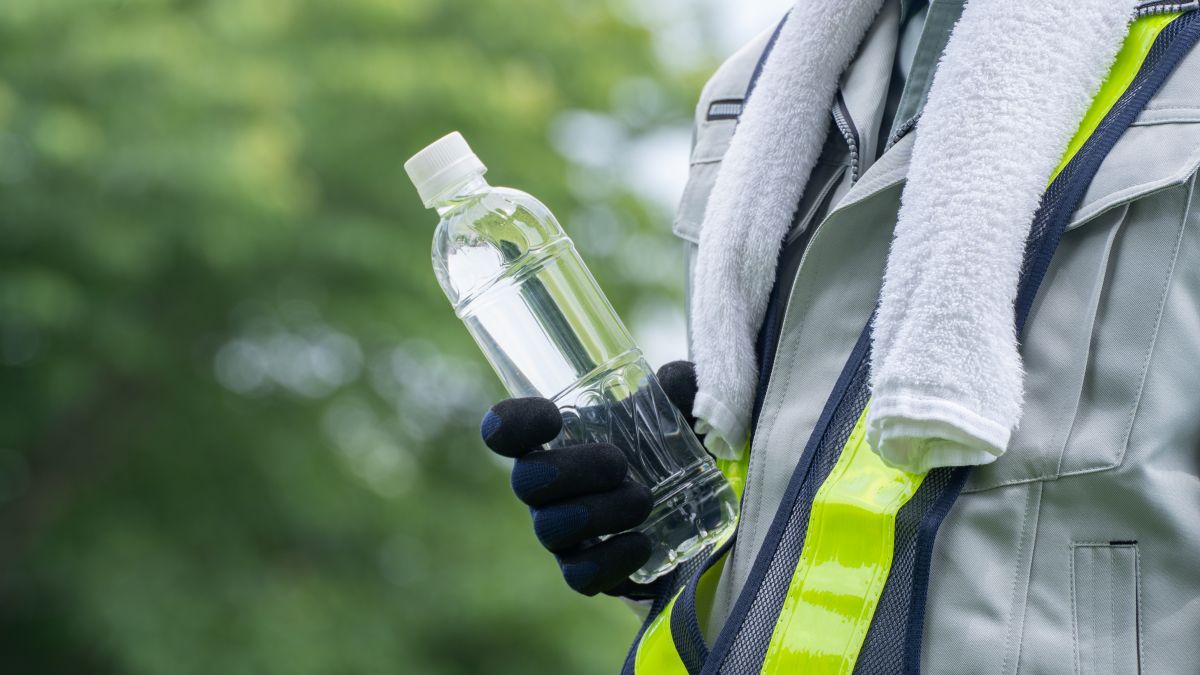
Drink plenty of water
Even if you don't feel thirsty, drink water frequently.
Try to consciously rehydrate every 20 to 30 minutes.
It is recommended to drink one to two glasses at a time, rather than drinking a large amount at once.
Sports drinks containing salt and sugar make it easier for the body to absorb fluids.
Putting salty candies or tablets in your mouth is also a good countermeasure.
Take a good rest.
Don't push yourself too hard; take a break in a cool place.
On hot days, it's important to lengthen your breaks or increase the frequency of breaks.
Break times are often determined based on the heat index, but if you're not feeling well, don't push yourself and ask for more breaks.
Getting enough sleep and eating nutritious meals are also important measures to maintain good physical condition.
It's also important not to drink too much alcohol the day before you start work.
Avoid sunlight
Wear long-sleeved clothing or take other measures to prevent direct sunlight from hitting your skin.
Long-sleeved clothing may feel hot, but there are many highly functional options available that absorb sweat and keep you feeling cool.
When taking a break, please rest in the shade where the sun doesn't shine.
Heat countermeasures you should have ready for working outdoors
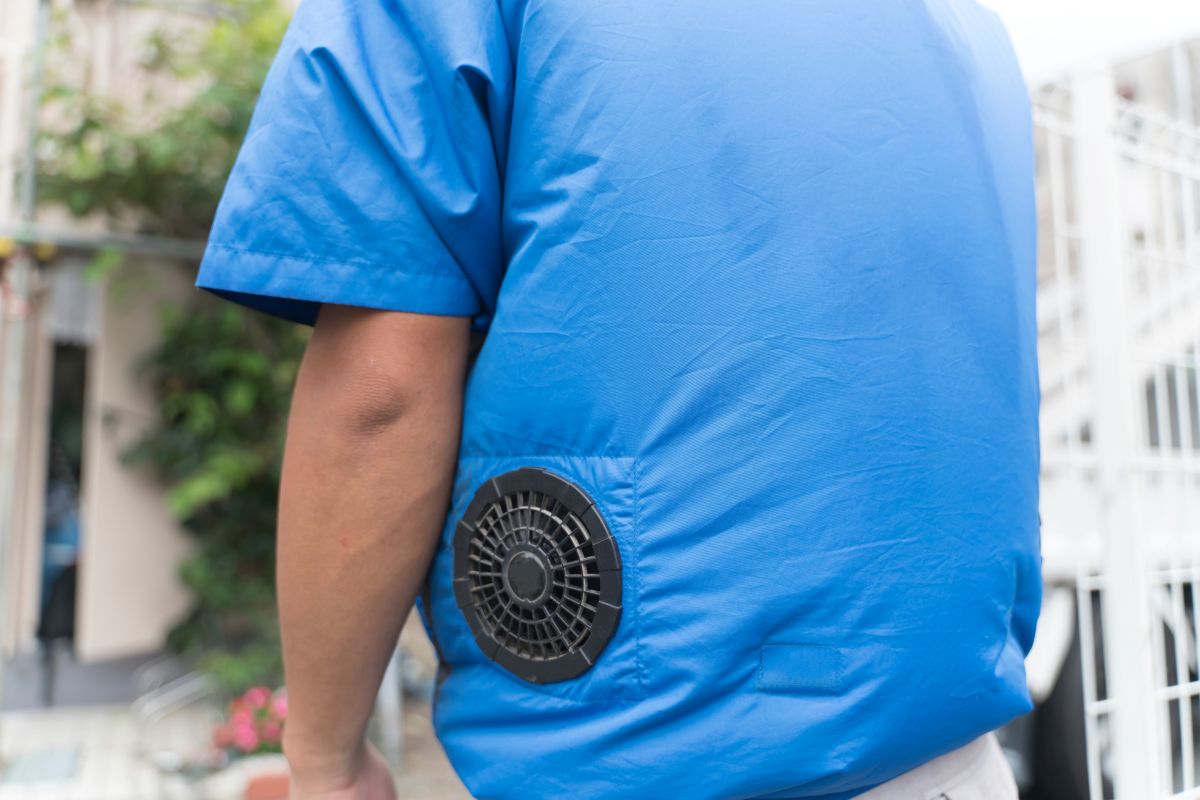
Many people at construction sites in Japan use convenient gadgets to prevent heatstroke.
Please also try the next item we'll introduce.
Fan-equipped clothing
This is a work uniform with a small built-in fan.
It circulates air inside the clothing, making it easier for body heat to escape.
Peltier vest
This is a work suit with a metal cooling plate attached.
The cooling plate can cool areas such as the back and waist by making contact with the body.
Unlike a fan, it does not draw in outside air, so it can be used in environments where dust and hazardous substances are generated.
Ice Vest
This vest has a pocket for inserting a cold ice pack.
It can be used to cool areas such as the armpits and back.
Compression innerwear
These undergarments gently compress muscles to reduce body fatigue.
Choosing items that are particularly good at absorbing sweat and drying quickly will help prevent your body from feeling sticky.
Cooling innerwear
These are undergarments made of a material that feels cool to the touch.
Wearing it under your work clothes will help you feel cooler even on hot days while working.
helmet
Choosing a helmet with ventilation holes or a heat-shielding type will help prevent your head from getting too hot.
Additionally, you can add a sunshade to the helmet or insert cooling pads inside.
However, even if you use heat-relief products, you cannot completely prevent heatstroke.
Be sure to stay hydrated, replenish your electrolytes, and take breaks.
In Japanese construction sites, there are many other points to consider regarding clothing for safety, in addition to measures to cope with the heat.
Please also read this article.
How to choose appropriate clothing for safe work at construction sites in Japan
When working outdoors, be sure to recognize the signs of heatstroke in your colleagues.
Heatstroke is often difficult to recognize in oneself.
I myself have experienced heatstroke while managing an event in Vietnam some time ago.
I didn't notice any thirst or early symptoms of heatstroke, and only realized I had heatstroke when I started feeling lethargic.
Some of the people I worked with didn't know when it was okay to drink water and were refraining from hydrating.
Even if you don't feel thirsty, your body may already be dehydrated.
Also, even if you think you can tolerate it for now, your symptoms can suddenly worsen.
That's why it's so important for colleagues to check in on each other's condition on-site.
When observing your teammates, try checking the following points:
- Are you staying hydrated?
- Does your complexion look okay?
- For example, are you sweating profusely during breaks?
Let's be mindful of each other's well-being so that we can notice any changes in each other's health.
What to do if you suspect you have heatstroke while working outdoors
If you feel unwell or notice that someone around you is acting strangely, take action immediately.
When I thought I had heatstroke
Tell your leader or supervisor immediately.
Saying "I'm not feeling well" is important for protecting your own life.
Go to a cool place immediately and apply a cold compress to the sides of your neck.
When someone around you might be suffering from heatstroke
If you notice someone around you might be suffering from heatstroke, ask them, "Are you okay?"
Call an ambulance immediately if you experience any of the following conditions:
- No response when called upon.
- Having a seizure
- Unable to walk in a straight line
- Unable to drink water on their own
You can call an ambulance by dialing "119".
First, you will be asked whether it is a fire or a medical emergency, so answer "medical emergency".
You will be asked about your address, symptoms, etc., so please answer each question one by one.
This article provides detailed information on how to call an ambulance in Japan.
How do you call an ambulance in Japan? Learn how to use it correctly.
If the animal responds to calls and is able to hydrate itself, please follow these steps:
- Take them to a cool place
- Loosen your clothes
- Cool the neck, armpits, and groin.
- Give them fluids and salt.
- Report to the leader immediately.
However, symptoms can sometimes worsen suddenly.
Please do not leave someone who is feeling unwell alone.
Summary: Take proper precautions against the heat when working outdoors.
Japanese summers are characterized by high temperatures and humidity, making it easy to suffer from heatstroke.
At construction sites, it's important to be aware of the risk of heatstroke not only during outdoor work but also during indoor work without air conditioning.
Starting in 2025, taking measures to prevent heatstroke at work sites will be mandated by law, but the most important thing is the awareness of each and every one of you.
Don't think, "This much is fine," and make sure to stay hydrated and take breaks frequently.
It's also important to use helpful gadgets to prevent your body from overheating.
Heatstroke is difficult to recognize in oneself, so pay attention to how your colleagues are doing.
Also, if you're feeling unwell, don't hesitate to tell your leader or supervisor.
If you notice something is wrong with one of your teammates, please speak up immediately.
Let's work safely on Japanese construction sites during the summer with the right knowledge!
About us, JAC
JAC(Japan Association for Construction Human Resources)is an organization that supports all Specified Skilled Workers working in the Japan construction industry. We work with companies that accept Specified Skilled Workers to create a work environment that is easy for everyone to work in.
We're also taking the exams you need to become a Specified Skilled Workers!
And JAC has received many requests for job offers from companies that want Specified Skilled Workers to work for.
Specified Skilled Workers Wanted! Job Listings
For those of you who want to work in Japan using Specified Skills, we are introducing jobs that match your occupation and aspirations!
If you have any problems, please feel free to contact us!